Research

AURORA RLab develops physics-grounded, computation-first approaches to understand and design resilient materials—linking atomistic simulation, multiscale modeling, and data-driven discovery.

Research highlights

Representative snapshots from workflows, simulation models, and analysis outputs.
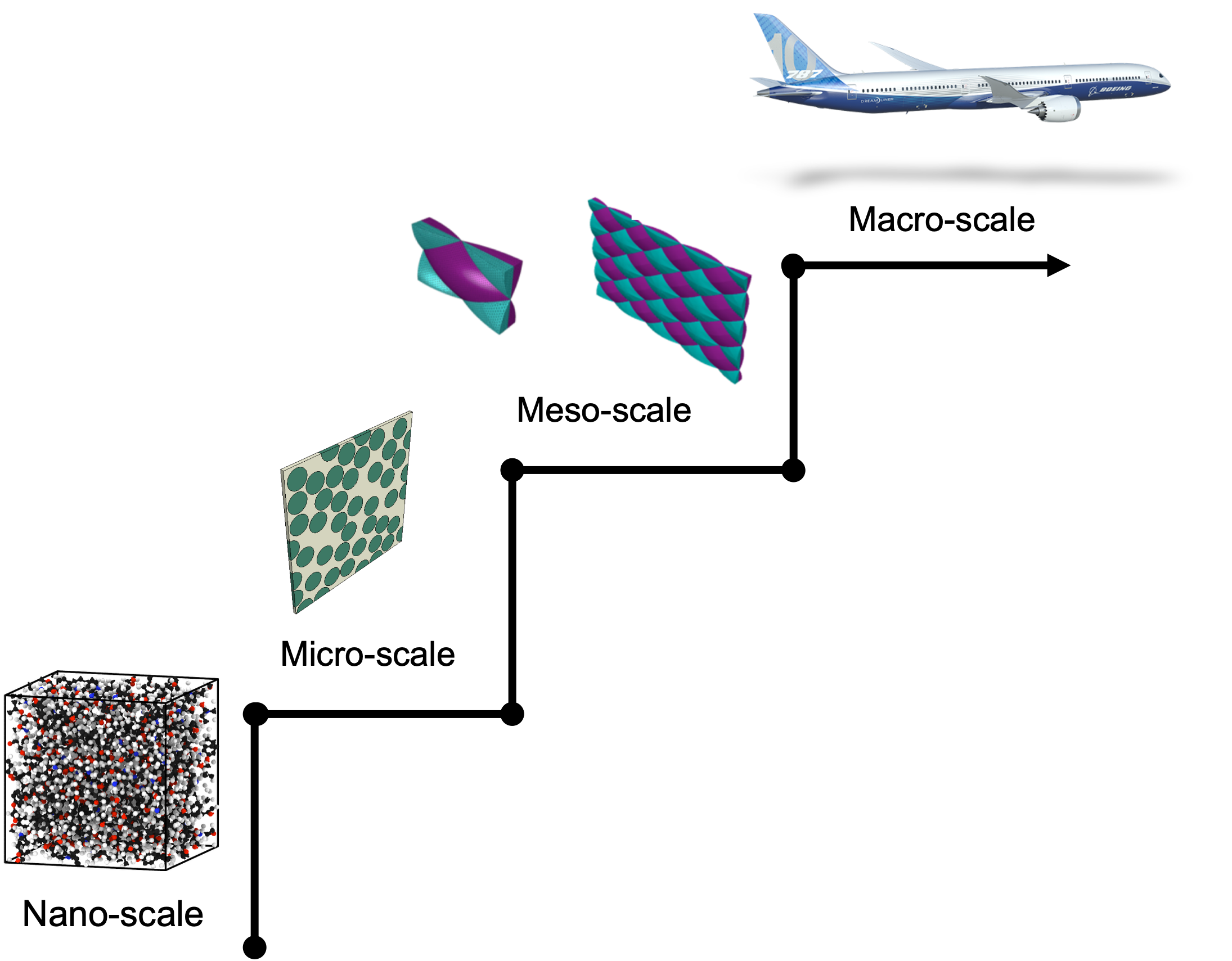
Schematic of multiscale modeling workflow
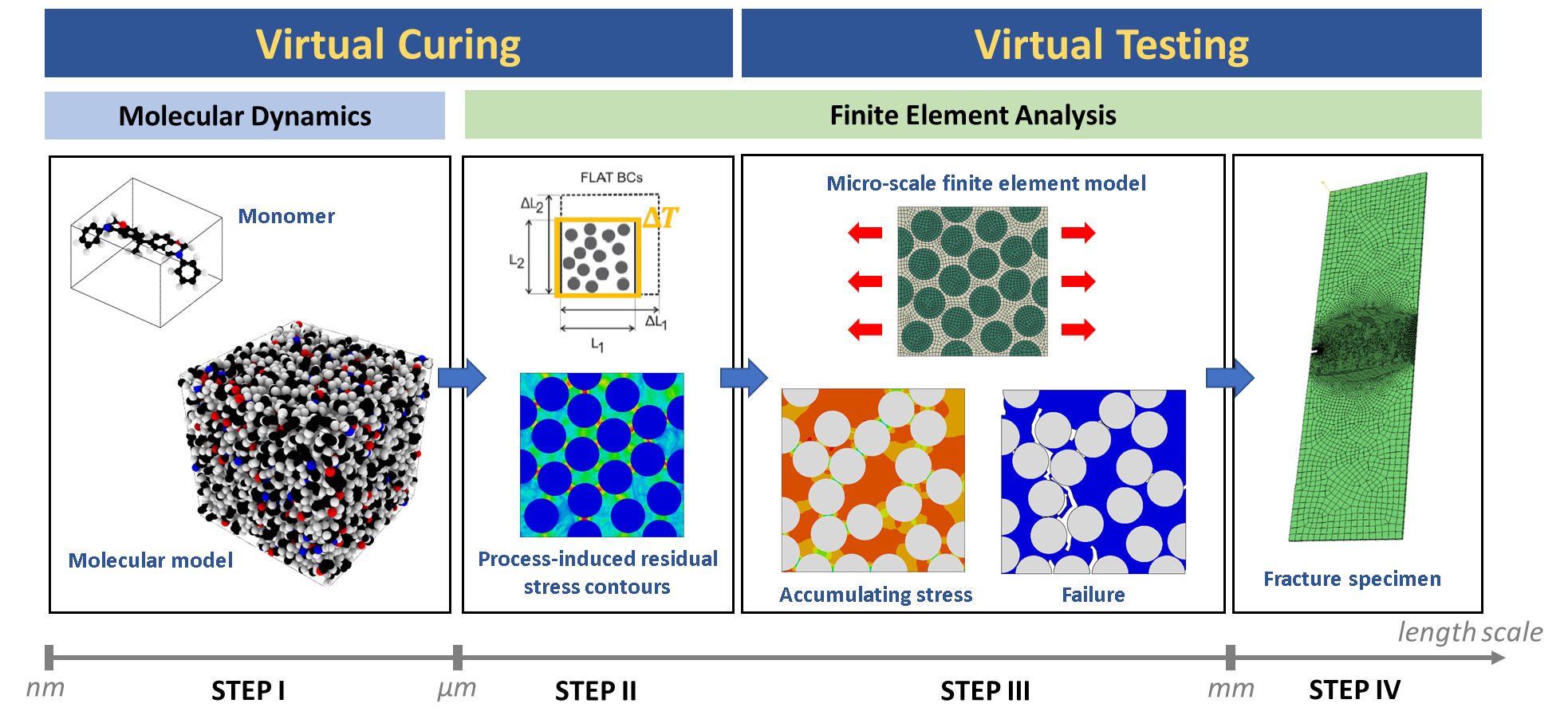
Multiscale modeling: connecting atomistic simulations to continuum-scale insights.
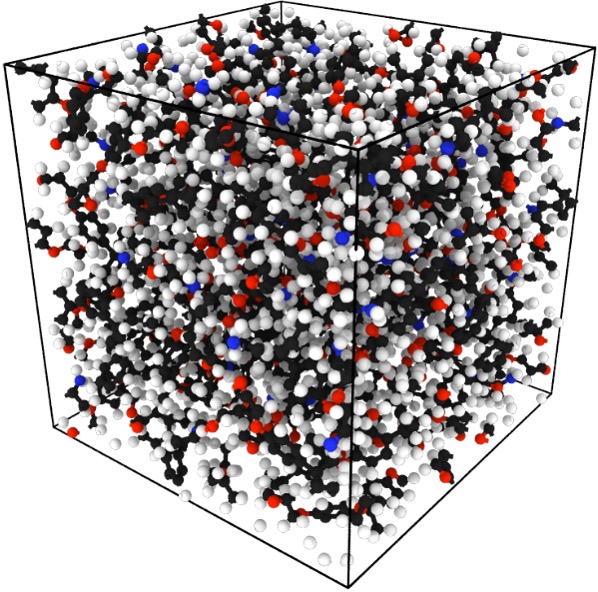
Atomistic epoxy molecular dynamics model
Representative epoxy molecular dynamics model used for structure–property studies.
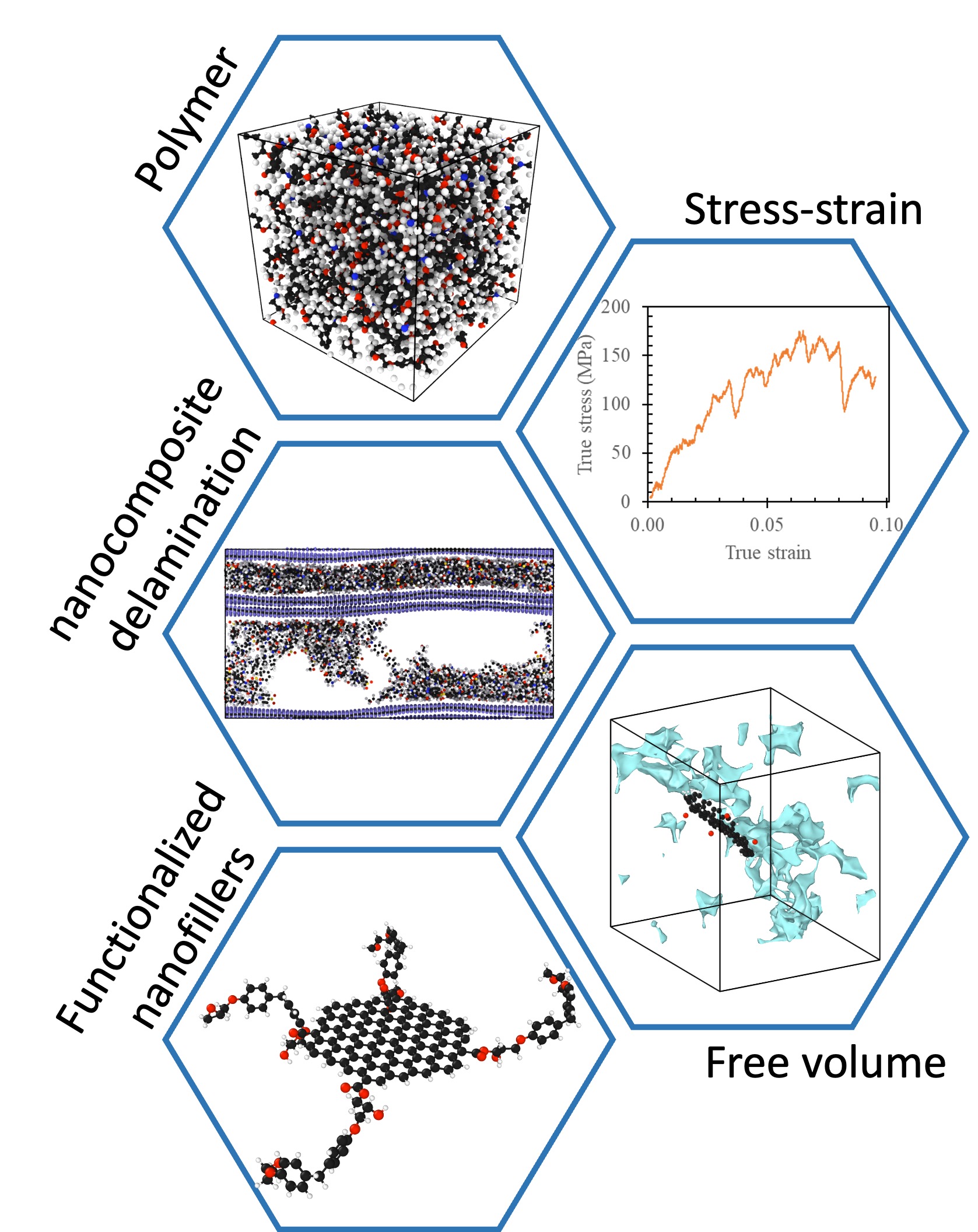
Nanocomposite modeling schematic
Nanocomposite modeling pipeline: filler, interface, and polymer network effects.
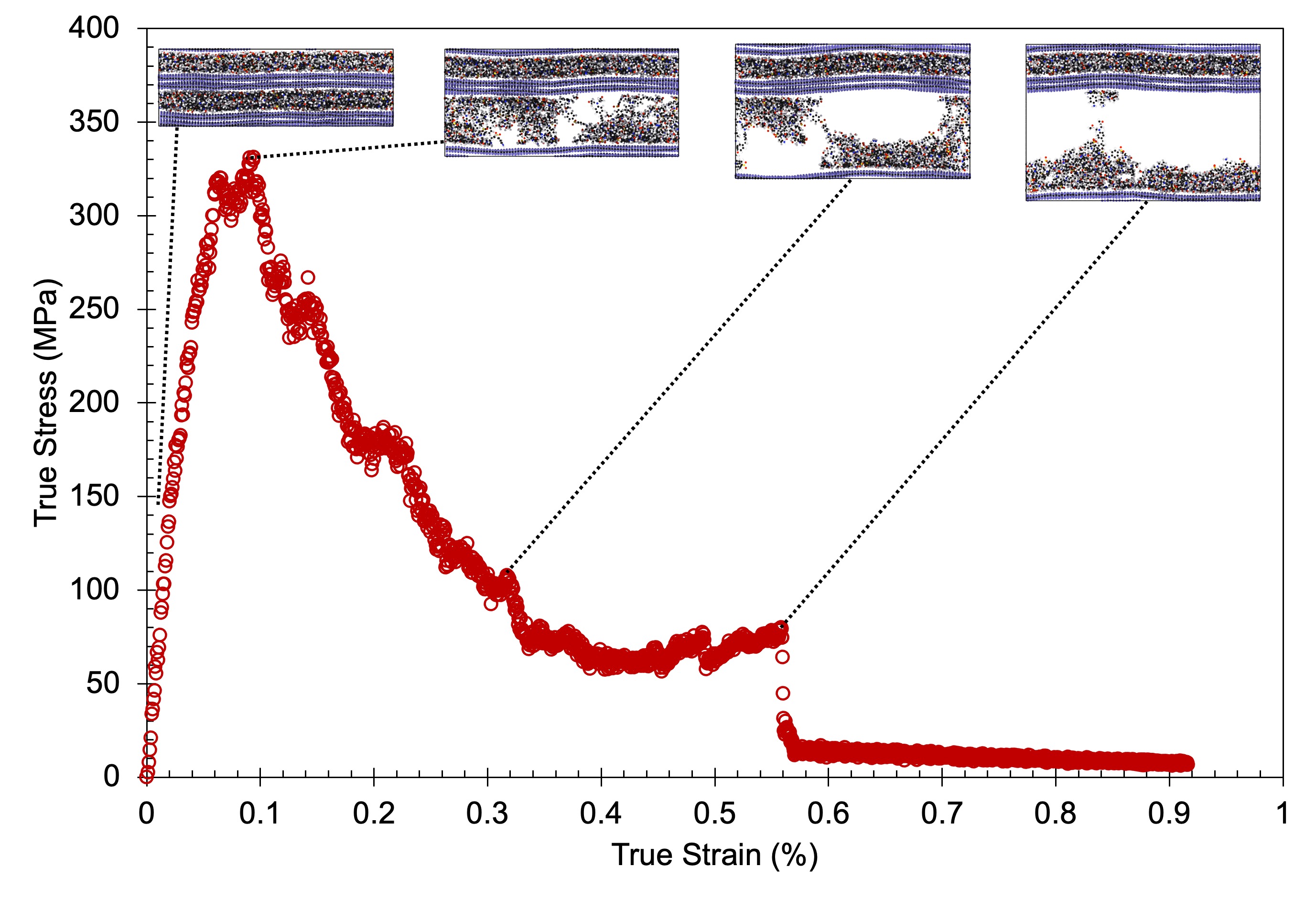
Composite delamination plot
Representative analysis output for damage initiation and delamination behavior.
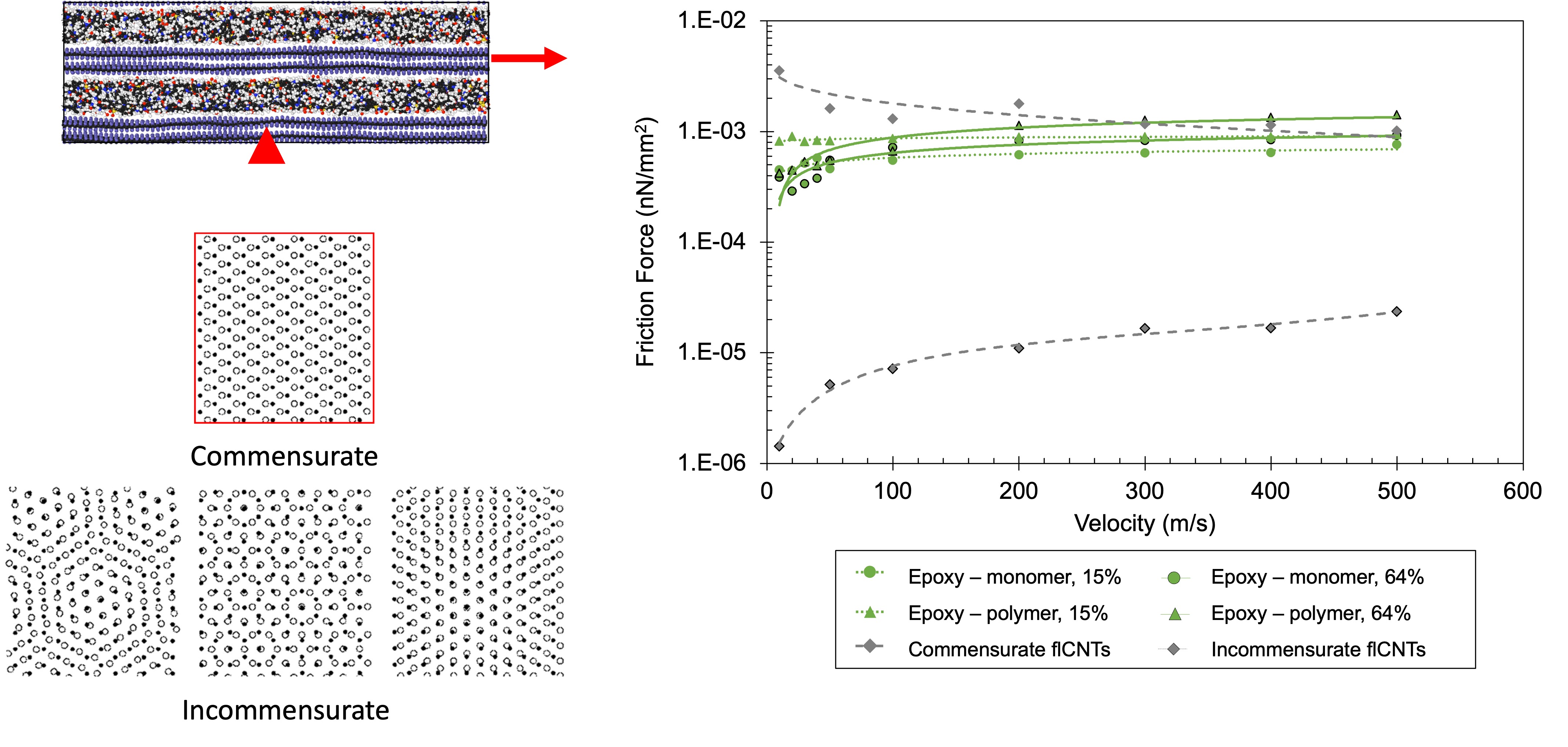
Interfacial friction plot for nanocomposite
Interfacial friction analysis for polymer–nanofiller systems: quantifying load transfer potential.
Multiscale framework chart
Framework overview for simulation-driven screening and design decision support.

Research thrusts

Core directions that connect atomistic mechanisms to engineering-scale behavior and material design.

Atomistic modeling of polymers & nanocomposites

MDLAMMPSStructure–property
Molecular dynamics to quantify how crosslinking, interfaces, and nanoscale morphology influence stiffness, toughness, deformation, and transport. Emphasis on polymer networks and nanoparticle-filled systems (e.g., graphene-derived fillers).

Mechanics under extreme and multiaxial loading

DeformationYieldFailure
Simulation-driven understanding of yield, damage initiation, and failure precursors under shear/tension/compression and combined loading. Target: mechanistic metrics that translate into design rules.

AI/ML for materials screening & surrogate models

AI/MLDescriptorsSurrogates
Build robust descriptors from simulation outputs and develop surrogate models for rapid screening. Focus on interpretable pipelines that preserve physical meaning and enable uncertainty-aware decisions.

Multiscale workflows & reproducible simulation pipelines

PythonHPCAutomation
Reproducible, automated pipelines for building systems, running ensembles, extracting metrics, and producing publication-grade analysis. Designed for scaling on HPC/GPU resources.

Electronic-structure inputs for chemistry-aware modeling

DFTQMParameterization
Quantum calculations to support chemistry-aware modeling—e.g., charge distribution trends, bonding/functionalization effects, and guidance for force-field validation/parameter tuning.

Materials-by-design for resilient applications

Design rulesApplications
Integrate simulation + ML insights into actionable design choices: filler selection, functionalization strategy, processing/cure considerations, and microstructure targets for optimized performance.

From atoms to decisions

A simple view of how modeling results become screening criteria and design guidance.

1) Build

Generate realistic structures, interfaces, and cure/crosslink states.

2) Simulate

Run ensembles under relevant loading/conditions on CPU/GPU HPC.

3) Extract

Compute mechanistic metrics (stress–strain, free volume, orientation, etc.).

4) Learn

Train interpretable models to screen candidates and derive design rules.

Outcome: fast iteration from hypotheses to validated computational evidence and decision-ready insights.

Tools & computing

Representative tools used across modeling, automation, and data analysis.

LAMMPS

Atomistic MD

VASP / Quantum ESPRESSO

Electronic structure

Python

Automation & analysis

HPC / GPUs

Scaling & throughput

MDAnalysis

Trajectory analysis

pymatgen

Materials tooling

ML stack

Surrogates & screening

Versioned workflows

Reproducibility

Collaborate

Interested in collaborating, co-advising students, or discussing a project fit?